

A student scores 94% in CBSE. The family is proud. Teachers are satisfied. Relatives call it an excellent result. Everyone assumes that the child is ready for top global universities.
Then the rejection emails start coming.
The rejection is not because the student is weak. It is because high marks alone do not prove global university readiness.
This is the reality many Indian parents discover too late. A child may be fully board-ready, but not necessarily global-ready. These are two different things.
Board Ready vs Global Ready
CBSE prepares students for a defined syllabus, structured examinations and subject-based assessment. It builds discipline, academic stamina and examination confidence. That is valuable.
But global universities often evaluate a wider profile. They ask: Can the student think independently? Can they write academically? Have they explored the subject beyond the textbook? Is there evidence of research, projects, reading, communication and self-management?
A high CBSE percentage opens the door. But global readiness builds the case.
Why 95% May Not Be Enough
Strong marks matter. No serious university ignores academic performance. But when many applicants have strong grades, marks alone stop being a differentiator.
Global universities may look for subject depth, clarity of interest, writing ability, recommendations, projects, external benchmarks and evidence of independent learning.
A student with 95% but no academic writing skill, no project depth and no clear subject direction may look less convincing than a student with slightly lower marks but a stronger, more coherent profile.
This is the gap many families miss.
The Writing Gap
One of the biggest hidden weaknesses among Indian students is academic writing.
Board exam writing is different from university writing. In CBSE exams, students often answer within a structured format: definitions, points, explanations, formulas and expected answers.
University-level writing requires a different skill. Students must build arguments, use evidence, cite sources, compare ideas, defend opinions and write long-form essays.
A simple test for parents is this: ask your child to write a 600-word essay explaining why they want to study their chosen subject, supported by examples and evidence.
If the child struggles, the issue is not English fluency alone. The issue is academic thinking and writing structure.
This skill takes months or years to develop. It cannot be built one month before the application deadlines.
Subject Alignment Matters
Many parents assume that taking PCM automatically makes a student competitive for Engineering or Computer Science abroad. It may satisfy basic academic eligibility, but competitiveness requires more.
A Computer Science applicant should show coding projects, mathematics depth, problem-solving, competitions or technology-related work.
An Economics applicant should show data understanding, analytical writing and awareness of real-world economic issues.
A Psychology applicant should show reading, observation, research interest and reflective writing.
A Design applicant needs a portfolio. A Humanities applicant needs essays, reading and argumentation.
The student’s subjects, activities and projects should tell one clear academic story.
External Benchmarks Add Credibility
Internal school marks are useful, but they vary from school to school. Some schools are strict, while others are generous.
That is why external benchmarks can strengthen an application. Depending on the country and university, these may include SAT, AP, Olympiads, academic competitions, verified research projects, portfolios or strong writing samples.
These are not required everywhere. But they help prove ability beyond internal assessment.
Parents should check the requirements of each target university directly from official sources rather than depending only on general advice.
Generic Profile vs Spiky Profile
Many students build a generic profile: some dance, some play sports, one volunteering event, one school leadership role and good marks.
Nothing is wrong with these activities. But together they may not show academic direction.
A stronger profile is often “spiky” — meaning the student has one clear area of depth.
For example, a student applying for Computer Science with coding projects, mathematics competitions and an essay on AI ethics shows direction. A student applying for Economics with a data project, reading habit and financial literacy initiative shows direction.
Parents should ask: What does my child’s profile say about who they are academically?
The 10-Point Global Readiness Audit
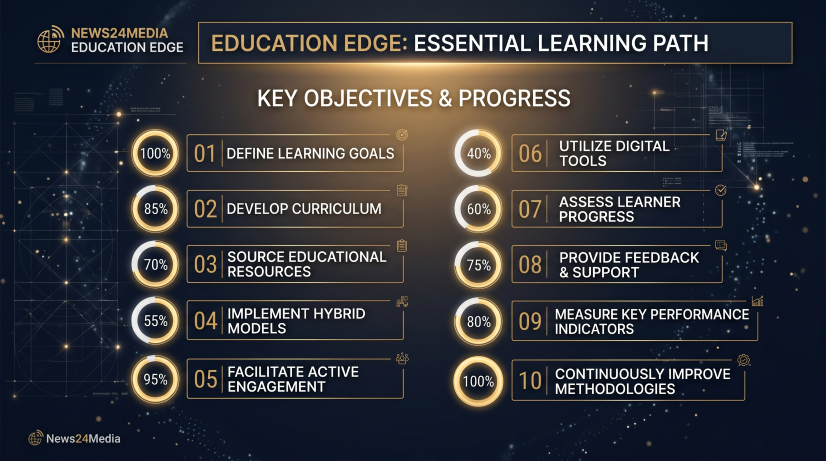
Parents can evaluate their child using these ten points:
- Are academic scores consistently strong?
- Are subjects aligned with the intended major?
- Is there any external benchmark?
- Can the student write structured academic essays?
- Does the student read beyond textbooks?
- Is there a serious project, research work or portfolio?
- Can the student communicate clearly in interviews or presentations?
- Does the student use digital tools productively?
- Is there a clear academic direction?
- Can the student manage deadlines and learning independently?
If a student is strong only in marks, they may be board-ready but not fully global-ready.
Download the Global Readiness audit sheet
A Parent Action Plan
For Class 9 and 10 students, parents should focus on reading, writing, communication, Olympiads, projects and subject exploration.
For Class 11 students, the focus should shift to subject alignment, external benchmarks, portfolio building, academic direction and university research.
For Class 12 students, the focus should be on application deadlines, essays, recommendations, documents, financial planning and final university shortlist.
Global readiness is not built at the last moment. It usually needs 12 to 36 months of planning.
Final Word
CBSE marks are important. They are the foundation. But they are not the full story.
A truly global-ready student needs marks, subject depth, academic writing, external proof, project work, communication confidence and self-management.
Parents should not wait until Class 12 to discover this gap. The best time to begin preparation is Class 9. The second-best time is today.
The real question is simple: Is your child only board-ready, or truly global-ready?